
ISO 14001 Lead Auditor Training in Dubai: Preparing Environmental Professionals for the ISO 14001:2026 Era
Environmental management has evolved from a compliance function into a strategic business discipline. Across the UAE, organizations are under increasing pressure to reduce environmental impacts, strengthen sustainability initiatives, comply with regulatory obligations, and demonstrate responsible business practices to customers, investors, and government authorities. These expectations have significantly increased demand for professionals who understand how Environmental Management Systems operate and how they should be audited against internationally recognised requirements.
As a result, ISO 14001 Lead Auditor Training in Dubai has become one of the most sought-after professional development programmes for environmental managers, HSE professionals, quality specialists, consultants, and individuals pursuing careers in management system auditing.
The publication of ISO 14001:2026 has further accelerated this demand. Organizations already certified to ISO 14001 are beginning to evaluate transition requirements, while businesses implementing Environmental Management Systems for the first time are looking for professionals capable of leading audits, identifying risks, and supporting continual improvement.
Whether you are planning to become a third-party auditor, strengthen your consulting expertise, or lead internal environmental audits within your organization, choosing the right training programme is one of the most important investments you can make in your professional career.
Why ISO 14001 Lead Auditor Training Matters More Than Ever?
The role of environmental auditors has changed considerably over the past decade. Today's auditors are expected to do far more than verify compliance with documented procedures. They evaluate organizational context, leadership commitment, environmental risks, legal obligations, operational controls, performance indicators, and continual improvement processes.
Businesses no longer view Environmental Management Systems as isolated compliance programmes. Instead, they integrate environmental objectives into wider business strategies that include sustainability reporting, energy efficiency, climate-related initiatives, supply chain resilience, and Environmental, Social and Governance (ESG) commitments.
This shift has increased demand for professionals who understand both the technical requirements of ISO 14001 and the practical skills required to conduct effective management system audits.
Professionals who complete ISO 14001 Lead Auditor Training in Dubai often support organizations during implementation projects, supplier evaluations, certification audits, surveillance audits, transition planning, and integrated management system development.
Understanding ISO 14001 and Environmental Management Systems
ISO 14001 is the internationally recognised standard for Environmental Management Systems (EMS). Rather than prescribing environmental performance targets, the standard provides a structured framework that enables organizations to identify environmental aspects, assess risks and opportunities, establish operational controls, monitor performance, and continually improve environmental outcomes.
The standard can be implemented by organizations of every size and sector, including construction companies, manufacturers, logistics providers, healthcare facilities, educational institutions, hospitality businesses, government organizations, engineering firms, and energy companies.
Successful implementation depends not only on documented procedures but also on competent personnel capable of evaluating how effectively the Environmental Management System operates in practice. This is where qualified auditors play an essential role.
What You Learn During ISO 14001 Lead Auditor Training
Many professionals assume that a lead auditor course focuses only on auditing techniques. In reality, a comprehensive programme develops both technical understanding of ISO 14001 requirements and practical auditing competence.
A typical ISO 14001 lead auditor course in Dubai introduces participants to the principles of Environmental Management Systems before progressing to planning, conducting, reporting, and following up management system audits.
Participants generally develop knowledge in areas such as:
Beyond technical knowledge, effective training also strengthens communication, analytical thinking, decision-making, and leadership skills that are essential for conducting successful audits across different industries.
ISO 14001 Internal Auditor Course or Lead Auditor Training?
One of the most common questions professionals ask is whether they should begin with an Internal Auditor course or enrol directly in Lead Auditor Training. Although both programmes focus on ISO 14001, they serve different professional objectives.
An ISO 14001 Internal Auditor Course is designed for employees responsible for evaluating their own organization’s Environmental Management System. Internal auditors assess compliance, identify improvement opportunities, and support continual improvement activities before certification or surveillance audits.
A Lead Auditor Training programme prepares professionals to plan, lead, manage, and report management system audits. The knowledge gained is valuable for consultants, certification auditors, implementation specialists, compliance professionals, and individuals responsible for leading audit teams.
For professionals seeking long-term careers in auditing or consulting, Lead Auditor Training generally provides broader competence and greater career flexibility.
ISO 14001:2026 Training – Why Transition Knowledge Matters
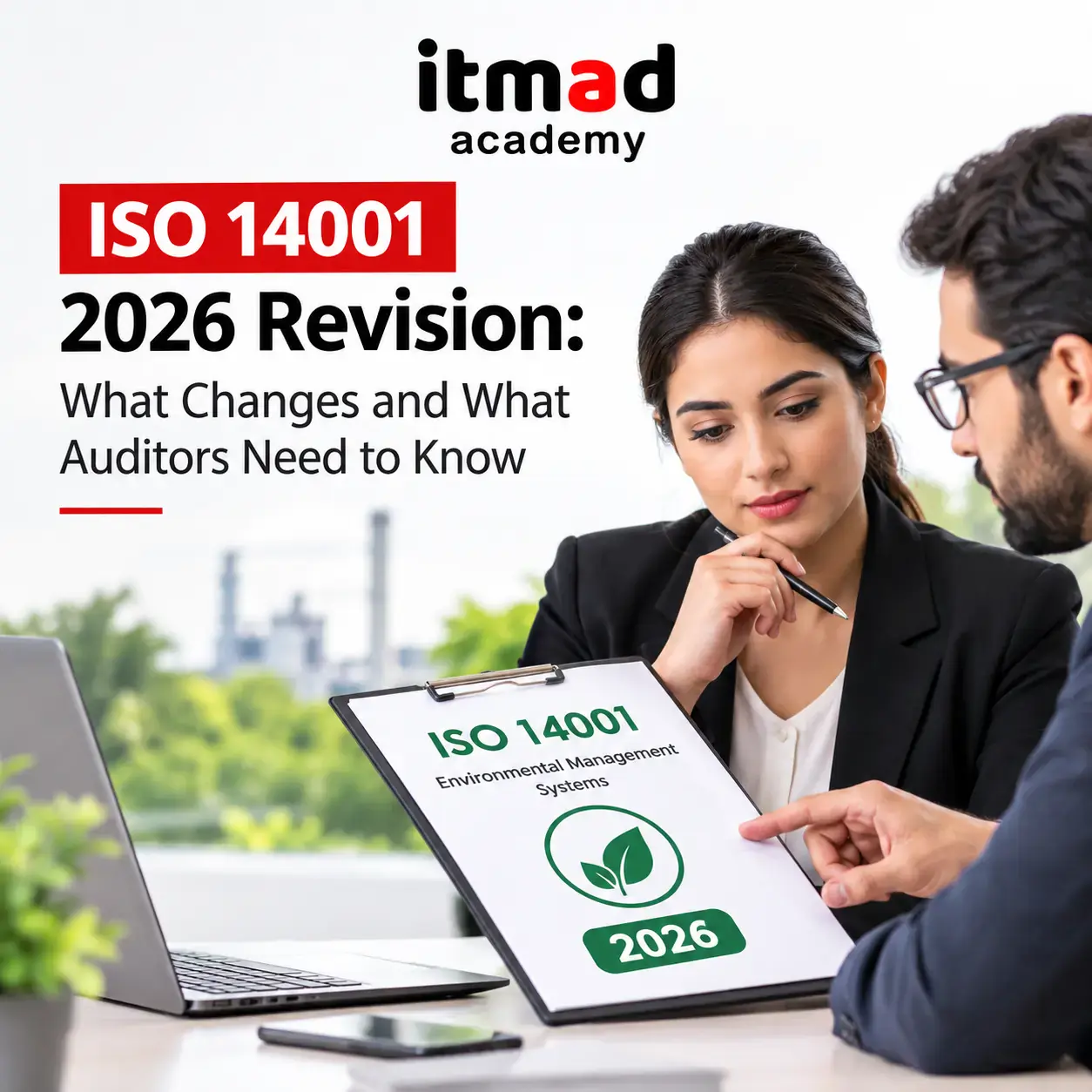
The publication of ISO 14001:2026 represents an important milestone for environmental management professionals. As organizations begin evaluating transition requirements, auditors must understand not only the updated clauses but also the practical implications for implementation, risk management, and audit planning.
Professionals who maintain current knowledge are better positioned to support organizations during transition projects and future certification activities.
For this reason, many training providers now integrate ISO 14001:2026 training into their learning pathways, enabling existing auditors and environmental professionals to update their competence without waiting until transition deadlines approach.
Developing early familiarity with revised requirements also helps organizations minimise disruption during future surveillance and recertification audits.
Classroom, Live Online, or Self-Paced Learning?
Professional learning has changed significantly over recent years. While classroom-based programmes continue to play an important role, many working professionals now prefer flexible learning models that accommodate project schedules, travel commitments, and international responsibilities.
Today, ISO 14001 training courses online allow participants to study at their own pace while maintaining full-time employment. Self-paced learning also enables professionals to revisit technical concepts whenever necessary, making it particularly valuable for those preparing for implementation projects or certification audits.
For organizations training multiple employees across different locations, online learning provides consistent delivery while reducing travel and scheduling constraints.
However, regardless of the delivery format, professionals should evaluate course content, instructor expertise, learning outcomes, practical exercises, and assessment methods before selecting a programme.
Career Opportunities After ISO 14001 Lead Auditor Training
Environmental management has expanded far beyond traditional compliance roles. Organizations today seek professionals who can evaluate management systems, identify business risks, improve operational performance, and support sustainability objectives through independent auditing.
Completing ISO 14001 Lead Auditor Training in Dubai can strengthen professional credibility across a wide range of industries. While certification alone does not guarantee employment, it demonstrates a structured understanding of auditing principles that many employers and consulting firms value.
Professionals who complete ISO 14001 EMS Lead Auditor Training often progress into roles such as:
These roles are increasingly relevant across construction, manufacturing, oil and gas, logistics, healthcare, utilities, aviation, facility management, and government sectors throughout the UAE and the wider GCC.
As organizations adopt integrated management systems, professionals who understand ISO 14001 alongside ISO 9001, ISO 45001, and ISO 50001 are often better positioned to lead multidisciplinary audits and improvement initiatives.
Choosing the Right Environmental Management System Training Course
Not every training programme delivers the same learning experience or professional value. Before enrolling, professionals should evaluate a course beyond its title or price.
A well-structured environmental management system training course should provide a balanced combination of technical knowledge, auditing methodology, and practical application. Participants should understand not only what the ISO 14001 requirements are, but also how to evaluate their implementation objectively during an audit.
When comparing training providers, consider:
The most valuable training programmes focus on building long-term competence rather than simply helping participants complete an examination.
Building Your Learning Path Beyond Lead Auditor Training
Every professional begins their learning journey at a different stage. Some participants are new to Environmental Management Systems, while others already manage audits or oversee compliance programmes.
For this reason, Itmad Academy offers multiple learning pathways that support professionals throughout their careers.
Depending on your experience and objectives, you may wish to progress through:
Together, these programmes create a structured learning pathway that supports both individual career development and organizational competence.
Training and Certification: Understanding the Difference
A common misconception is that completing ISO 14001 Lead Auditor Training in Dubai automatically certifies an organization against ISO 14001. In reality, training and certification serve two distinct purposes.
Training develops the knowledge and auditing skills of individuals. Certification, on the other hand, is an independent assessment of an organization's Environmental Management System against the requirements ofISO 14001.
Organizations preparing for certification often invest in professional training before beginning the audit process. Well-trained employees generally understand the standard more effectively, conduct stronger internal audits, and contribute to smoother certification outcomes.
If your organization is preparing to implement or certify an Environmental Management System, you can explore ISO 14001 Certification Services through Itmad Certification Services LLC, where experienced certification specialists support organizations throughout the certification process.
Why Continuous Professional Development Matters
Environmental legislation, stakeholder expectations, climate-related reporting, and international standards continue to evolve. Successful auditors recognise that learning does not end after completing a single course.
Maintaining competence requires regular professional development, participation in transition training, practical auditing experience, and continuous exposure to evolving management system practices.
Professionals who invest in ongoing learning are often better equipped to advise organizations, identify emerging risks, and deliver audits that provide meaningful business value rather than simply confirming compliance.
As sustainability becomes a strategic priority across industries, qualified environmental auditors will continue to play an increasingly important role in helping organizations improve performance and demonstrate responsible environmental management.
Ready to Start Your ISO 14001 Learning Journey?
Whether you are beginning your career in environmental management or expanding your auditing expertise, choosing the right training programme is an investment in your long-term professional development.
At Itmad Academy, our self-paced learning platform enables professionals to study from anywhere while balancing work and personal commitments. Courses are designed to help learners build practical knowledge, strengthen auditing competence, and stay informed about developments such as ISO 14001:2026.
Explore Related Environmental Management Courses
Continue Your Professional Development
Exemplar Global Approved ISO Certification Training Courses
The training can support careers in environmental management, HSE, sustainability, ISO consulting, compliance, supplier auditing, integrated management systems, and third-party auditing across a wide range of industries.
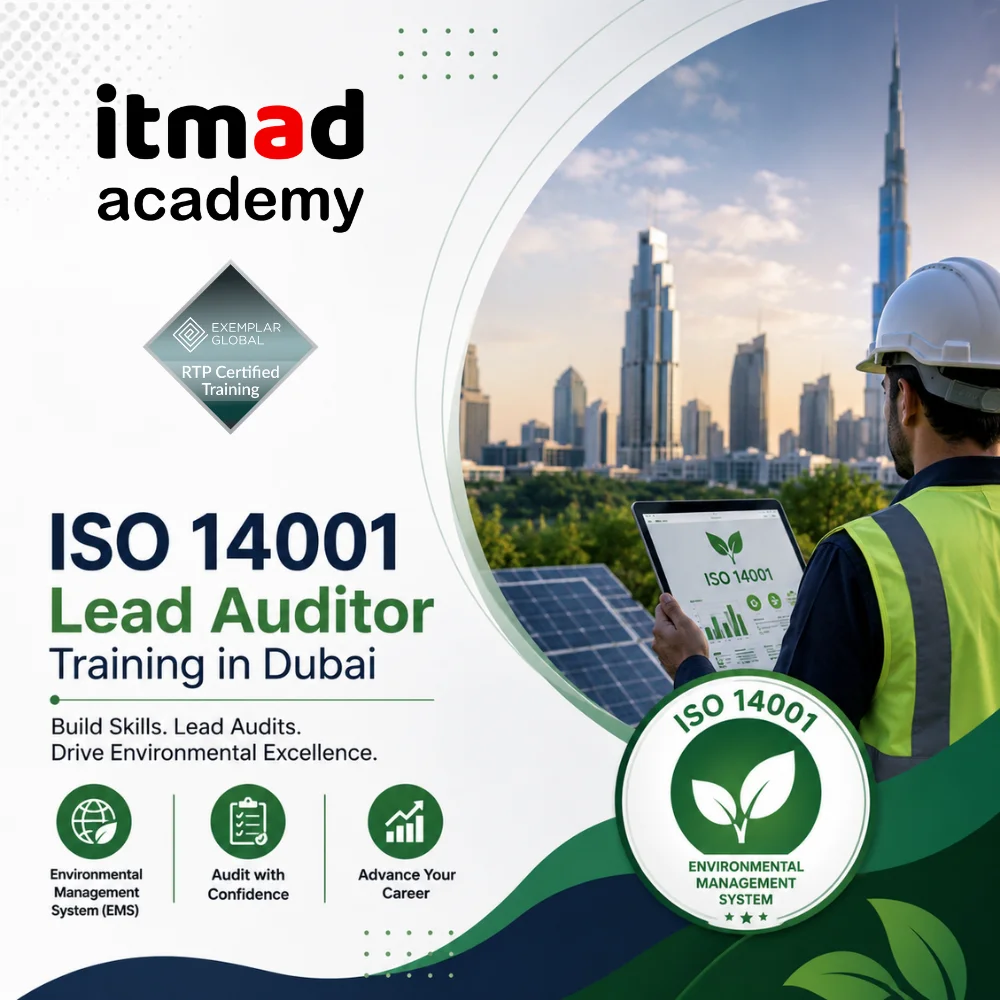
ISO 14001 Lead Auditor Training in Dubai is a professional programme designed to develop the knowledge and practical auditing skills required to plan, conduct, report, and lead Environmental Management System (EMS) audits against ISO 14001 requirements.
The course is suitable for environmental managers, HSE professionals, consultants, internal auditors, compliance officers, quality managers, and individuals planning to conduct or lead Environmental Management System audits.
Yes. Many professionals choose ISO 14001 training courses online because they provide flexible learning schedules while covering the same core principles of Environmental Management Systems and auditing techniques.
An Internal Auditor Course prepares employees to perform first-party audits within their own organization. Lead Auditor Training develops the competence required to plan and lead management system audits and is often chosen by consultants, certification auditors, and senior audit professionals.
Yes. As organizations prepare for the updated standard, ISO 14001:2026 training helps professionals understand new requirements, transition expectations, and the practical implications for Environmental Management Systems and auditing activities.
No. Training develops individual competence. Organizations seeking certification should undergo an independent certification audit conducted by a certification body. Businesses preparing for certification can explore ISO 14001 Certification Services through Itmad Certification Services LLC.
The duration varies depending on the delivery format. Classroom programmes are typically completed over several days, while self-paced online courses allow learners to progress according to their own schedule.